Nobody starts Brazilian Jiu-Jitsu planning to get hurt — but spend enough time on the mats and you'll either pick up a few nagging injuries or train next to someone who has. The reassuring part is that BJJ injuries are remarkably predictable. The same handful of body parts show up in study after study, and most of them get hurt the same way: during hard sparring, not competition.
Knowing where the risk lives is the first step to training around it. Here's what the research actually says about the most common BJJ injuries, and what you can do to keep training for the long haul.
First, where injuries actually happen
One of the most consistent findings across the research is when people get hurt. In a survey of BJJ practitioners, around 85–89% of injuries occurred during training rather than competition, and the large majority of those happened during sparring (rolling) specifically.
That's an important mindset shift. It's easy to assume competition is the dangerous part, but the day-to-day grind of live rolling — especially going hard with the wrong partner — is where most damage is done. Injury risk also tends to drop with more years of experience and rise with more training days per week, which tells you that how you roll matters as much as how often.
The most common BJJ injuries
1. Knees
The knee is consistently the single most-injured joint in BJJ, showing up in roughly a quarter of all reported injuries and affecting well over half of practitioners at some point. Damage is most commonly to the meniscus and the ligaments (MCL/LCL), often from leg entanglements, takedowns, and getting stuck in positions where the foot is planted while the body rotates — think a guard player whose knee gets torqued during a pass.
Knees are also the injury most likely to require surgery, so they're worth protecting. Tap early to leg locks (especially heel hooks if you train no-gi), and don't try to muscle out of deep leg entanglements.
2. Shoulders
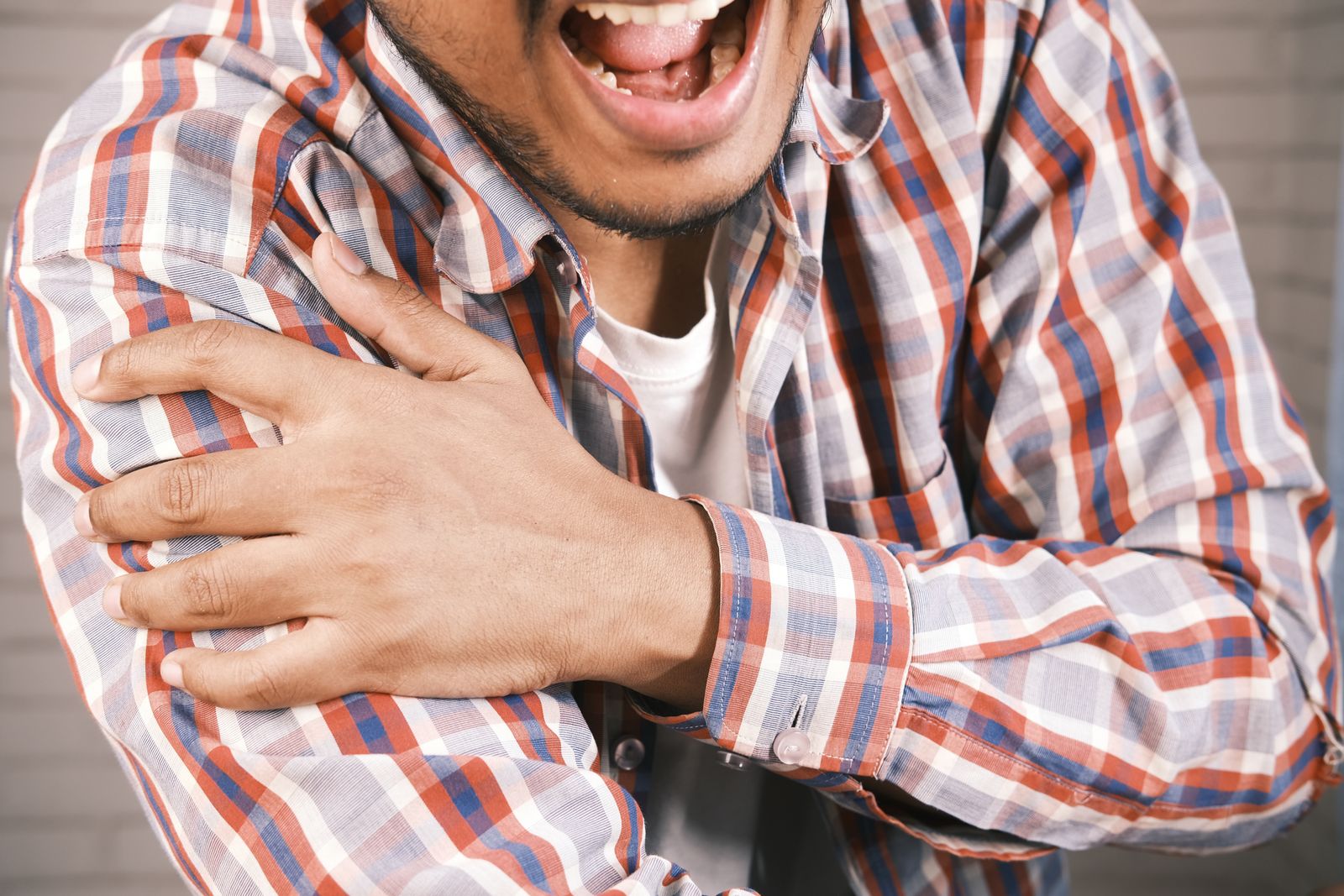
Shoulders are the second-most common site, injured almost exclusively in training. Submissions like the kimura, americana, and omoplata put the shoulder joint in vulnerable positions, and posting hard on an extended arm during scrambles is another classic mechanism. Shoulder injuries tend to keep people off the mats — most practitioners who hurt a shoulder took time off to recover.
3. Fingers and hands
If you ask any experienced grappler to show you their hands, you'll understand this one immediately. Fingers are the most frequently injured body part of all — sprains, jammed joints, hyperextensions, and the slow accumulation of gnarled knuckles that comes from years of gripping the gi. Most are minor (rest and buddy-taping handle a lot of them), but they're relentless. Grip fighting in the gi is the main culprit.
4. Elbows
The elbow's signature injury has a signature cause: the armbar. Hyperextension from not tapping in time — or a partner cranking too fast — is the classic mechanism. The fix is mostly cultural: tap early and often, and control your submissions when you're the one applying them.
5. Neck and cervical spine
Neck injuries are less frequent but tend to be more serious when they happen, with most requiring a break from training of two weeks or longer. Stack passes, guillotines, can-openers, and getting your head cranked in scrambles all load the cervical spine. Building neck strength and never "powering through" a tweaked neck go a long way here.
6. Ribs, feet, and toes
Rounding out the list: ribs (crushed under heavy side control or knee-on-belly), and feet and toes (caught in the gi, mat, or a tangle of legs). These are common but usually managed with rest rather than medical intervention.
Bonus: skin infections
Not a joint injury, but worth flagging — skin infections like ringworm and staph are among the most common medically diagnosed conditions in BJJ. Shower right after class, wash your gi every single session, and don't train on open cuts.
Quick reference
| Body part | Why it gets hurt | How to protect it |
|---|---|---|
| Knees | Leg entanglements, takedowns, twisting | Tap early to leg locks, don't muscle out |
| Shoulders | Kimura/americana, posting on extended arm | Tap shoulder locks early, strengthen |
| Fingers/hands | Gi grip fighting | Buddy-tape, rest, manage grip volume |
| Elbows | Armbar hyperextension | Tap before full extension, control your subs |
| Neck | Stack passes, guillotines, cranks | Neck strength, never power through |
| Ribs/feet | Heavy pressure, tangles in the gi | Frame early, free trapped feet |
How to actually reduce your risk
You can't make grappling risk-free, but you can stack the odds in your favor:
- Tap early, tap often. Ego is the most common injury mechanism in the sport. A tap costs you nothing; a blown-out elbow costs you months.
- Choose your rounds. Most injuries happen in hard sparring. You don't need to go 100% every roll — flow rounds and positional sparring build skill with a fraction of the risk. This is a big part of why drilling beats rolling for beginners.
- Build a base of conditioning. Fatigue makes technique sloppy and reactions slow. Staying in shape — and learning to stop gassing out — keeps you sharp late in rounds when injuries cluster.
- Don't train hurt. A minor tweak ignored becomes a major layoff. Manage your volume; not every session has to be a war.
- Warm up and drill. Cold joints in a scramble are asking for trouble. A few minutes of movement and consistent technical reps make your body more resilient — even a five-minute daily drilling habit helps grease the movements you rely on.
Listen to your body — and track it
The smartest thing you can do for your training longevity is pay attention to patterns. Which positions keep tweaking your knee? Which partners do you always come away from sore? A training journal makes those patterns visible, and logging your sessions in DrillBuddy helps you spot when you're ramping up volume too fast.
BJJ is a marathon, not a sprint. The practitioners who get really good aren't the ones who train the hardest for six months — they're the ones who are still on the mats in ten years. Tap early, roll smart, and protect the body that has to carry you there.
This article is for general information and isn't medical advice. If you're dealing with a persistent or serious injury, see a qualified healthcare professional.
Sources: Prevalence of Injuries during BJJ Training (PMC), Injuries Common to the BJJ Practitioner (PMC), Injury Patterns, Risk Factors, and Return to Sport in BJJ (PMC), Injury prevalence among BJJ practitioners globally (PubMed).