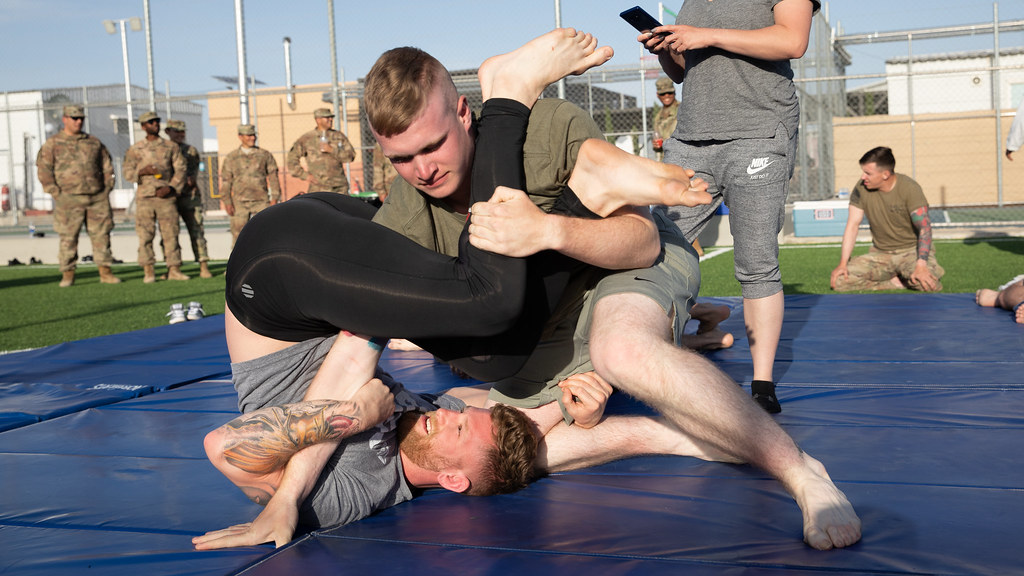
For a lot of beginners, passing the guard is the most frustrating part of jiu-jitsu. You're on top — which should be the good position — yet you can't seem to get past your opponent's legs, and every time you try, you get swept or submitted. The fix isn't a secret technique; it's understanding the principles of passing and then drilling a couple of reliable passes until they're automatic.
The principles that make every pass work
Before any specific technique, internalize these. Every good pass obeys them:
- Control before you pass. Establish control of the hips or legs first. Passing without control is just walking into sweeps.
- Kill the connection. The guard works through your opponent's grips and the connection of their legs to your body. Break that connection — strip grips, pin the legs — and the guard falls apart.
- Posture and base. Stay heavy and based so you can't be off-balanced. A passer who's reaching and over-extended is a passer who gets swept.
- Head position and pressure. Late in many passes, your head and shoulder pressure pin your opponent so your legs can finish the job.
Get these right and the specific pass almost doesn't matter.
Pass #1: The knee cut (knee slice)
The knee cut is the most useful pass for beginners to learn first. From inside your opponent's guard:
- Establish an underhook and control of their far hip
- Slice your lead knee across their thigh, cutting toward the mat
- Keep your head and shoulder pressure forward so they can't turn in
- Slide through into side control or take the back if they turn away
It's high-percentage, works in gi and no-gi, and teaches the head-and-shoulder pressure that makes passing feel effortless once it clicks.
Pass #2: The toreando (bullfighter) pass
A faster, more athletic pass that's ideal against open guard:
- Grab control of both pant legs (or shins in no-gi)
- Push their legs to one side, clearing them from your hips
- Sprint your hips around to the other side, staying low
- Drop your weight into side control before they can recover
The knee cut and toreando cover two different situations — the knee cut for tighter, more connected guards, the toreando for open, distance-based guards — so learning both gives you an answer to most beginners' guards.
A drilling progression
| Stage | Setup | Focus |
|---|---|---|
| 1 | Partner holds light guard | Pass mechanics + body position |
| 2 | Partner adds grips | Stripping grips before passing |
| 3 | Partner resists / re-guards | Chaining pass attempts |
| 4 | Live passing round | Finishing against full resistance |
Passing is a volume game — you need many clean reps for the timing to sink in, which is exactly why drilling beats rolling when you're learning a new skill.
Understand both sides
The fastest way to improve your passing is to understand what you're passing. The better you understand guard retention and how a good guard recovers, the easier it is to shut those recoveries down. Passing and retention are two sides of the same coin.
Track your passing game
Pick the knee cut, drill it forty times next session, and log it in DrillBuddy so you can see your passing reps accumulate alongside the rest of your game. You can also browse curated drills to add structure to your passing rounds.
Control, kill the connection, stay heavy, pass. Drill those principles into two reliable passes and the top game stops being a mystery.