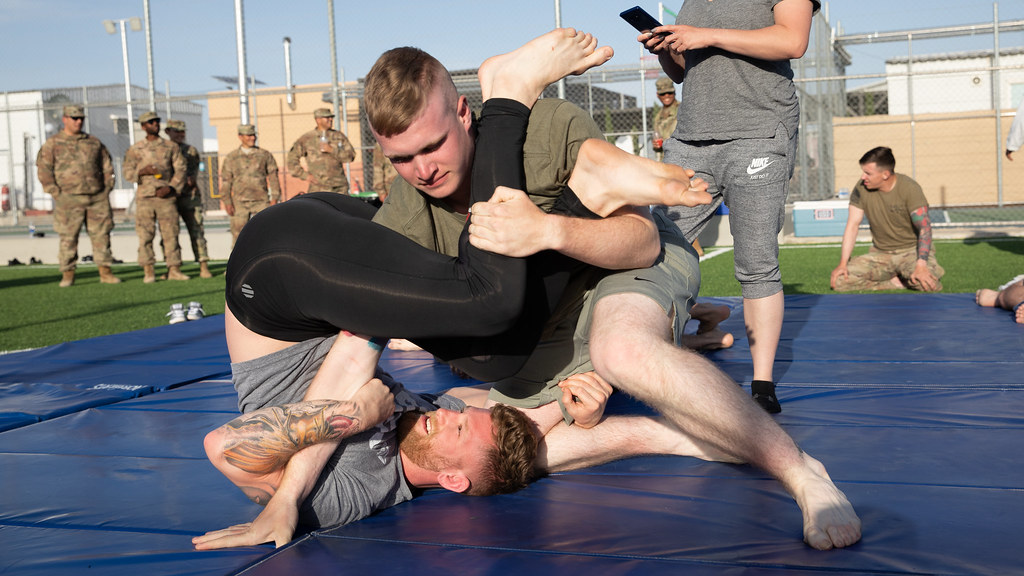
Side control is one of the most uncomfortable places to be in Brazilian Jiu-Jitsu. A heavier opponent can pin you, crush your ribs, and slowly hunt for submissions while you struggle to breathe. Learning to escape it is a non-negotiable beginner skill — and the good news is that a few reliable mechanics get you out far more often than brute strength ever will.
First: stop the crush
Before you can escape, you have to survive and create breathing room. The foundation is framing. Place one forearm across your opponent's hip or neck and the other against their shoulder, elbows tight to your body. These frames are your space-makers — without them, every escape stalls.
Common beginner mistake: framing with straight, locked arms far from your body. That just lets them collapse the frame and flatten you. Keep your elbows connected to your torso so your skeleton, not your muscles, holds the space.
The hip escape (shrimp)
Almost every side-control escape runs on the hip escape. With your frames in place:
- Bridge slightly to lighten their weight
- Shrimp your hips away, turning onto your side
- Insert your bottom knee into the gap your frame created
- Recover guard by getting that knee shield between you and your opponent
This is exactly why the shrimp is the most-drilled solo movement in jiu-jitsu — see our solo drills guide. Grooving it at home makes it automatic when you're being crushed.
The two escapes worth owning
1. Escape back to guard
The bread-and-butter. Frame, bridge, shrimp, and insert your knee to recover guard — usually into a knee shield or full guard. This gets you from a losing position back to neutral (or better), and it's the highest-percentage option for beginners.
2. Come up to your knees (the "ghost escape" or underhook escape)
When your opponent's weight shifts toward your hips, you can get an underhook on the far side, bridge, and "ghost" out to come up behind them or take their back. This one rewards good timing — you're trading their forward pressure against them.
Drill it under increasing resistance
Here's a progression to make these escapes real:
| Stage | What your partner does | Your focus |
|---|---|---|
| 1 | Holds light side control | Clean frames + shrimp mechanics |
| 2 | Adds moderate pressure | Bridging to create space first |
| 3 | Tries to pass / re-pin | Chaining escape to guard recovery |
| 4 | Live positional round | Escaping against full resistance |
Starting cooperative and adding resistance gradually is how you build escapes that hold up when it counts — the principle behind why drilling beats rolling early on.
Track your reps and patch the leak
If side control is where you keep getting stuck, make it your project. Note it in your training journal, drill the escape every session, and log it in DrillBuddy so you can see the reps stacking up. A position that terrifies you today becomes a non-issue after a few hundred focused repetitions.
Frame, bridge, shrimp, recover. Drill that sequence until it's a reflex and side control stops being a place you fear.