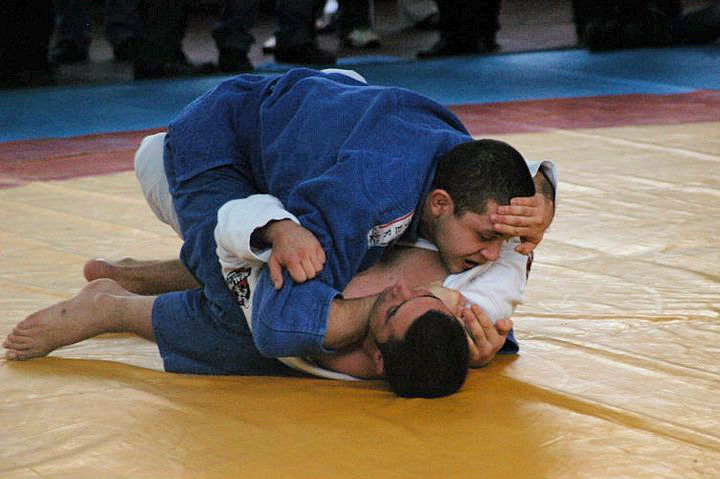
Every Brazilian Jiu-Jitsu student knows the feeling. The instructor shows a beautiful sequence, you nail it three times in drilling, and you walk off the mats thinking I've got this. Then you show up two days later and the move has evaporated. You can picture the grip but not the angle, the entry but not the finish.
This isn't a memory problem. It's a system problem. The good news: a few small habits will let you keep almost everything you're taught.
Why you forget BJJ techniques
Forgetting is the default, not the exception. Psychologists call it the forgetting curve: without reinforcement, we lose the majority of new information within days. BJJ is especially brutal because a single class might cover a takedown, a pass, a sweep, and a submission — far more than your brain can encode in one sitting.
Three things make it worse:
- Volume. You're shown too much, too fast, with no time to consolidate.
- No notes. You rely entirely on memory in a high-stimulation environment.
- No review. You never revisit a technique until it randomly comes up again months later.
Fix those three and retention takes care of itself.
Capture the technique within an hour
The single highest-leverage habit is writing the move down the same day, ideally right after class while the details are fresh. You don't need an essay — you need enough to reconstruct it later.
A good capture answers four questions:
- What's the position? (e.g. opponent in your closed guard)
- What are the key grips or controls? (collar and same-side sleeve)
- What's the critical detail? The one thing that makes it work — usually an angle, a weight shift, or a timing cue.
- What's the finish?
That's it. Four lines beats four paragraphs, because you'll actually do it consistently.
Use spaced repetition, not cramming
Here's the part most people miss. Capturing a move once isn't enough — you have to revisit it on a schedule. Reviewing a technique briefly after one day, then three days, then a week, dramatically outperforms reading your notes once.
You don't need to physically drill it every time. Even mentally rehearsing the steps — closing your eyes and walking through the grips and angles — reinforces the pathway. When you can get hands-on, a few focused reps beat a dozen sloppy ones, a point we make in Why Drilling Beats Rolling for Beginners.
Build a personal technique library
Over a year of training you'll be shown hundreds of techniques. Loose notes in three different notebooks and a phone's camera roll won't cut it. You want one searchable place where every move lives, tagged by position, so you can pull up "everything I know from half guard" in seconds.
This is exactly the problem DrillBuddy was built to solve: log the moves and drills you learn, organize them by position, and track how often you've actually practiced each one. A technique you've reviewed eight times is one you own. For a deeper look at building that habit, see How to Keep a BJJ Training Journal.
Teach it to remember it
The fastest way to lock in a technique is to explain it to someone else. Teaching forces you to sequence the steps and expose the gaps in your understanding. Grab a training partner after class and trade moves: you show them today's sweep, they show you theirs. Five minutes of this is worth an hour of passive review.
Your retention checklist
To stop losing what you learn, do these four things consistently:
- Capture each technique the same day, in four short lines
- Review on a spaced schedule — one day, three days, one week
- Organize everything in one searchable library, tagged by position
- Teach at least one new move to a partner each week
None of this takes talent. It takes a system. Put one in place and you'll stop starting from scratch every time you step on the mats.