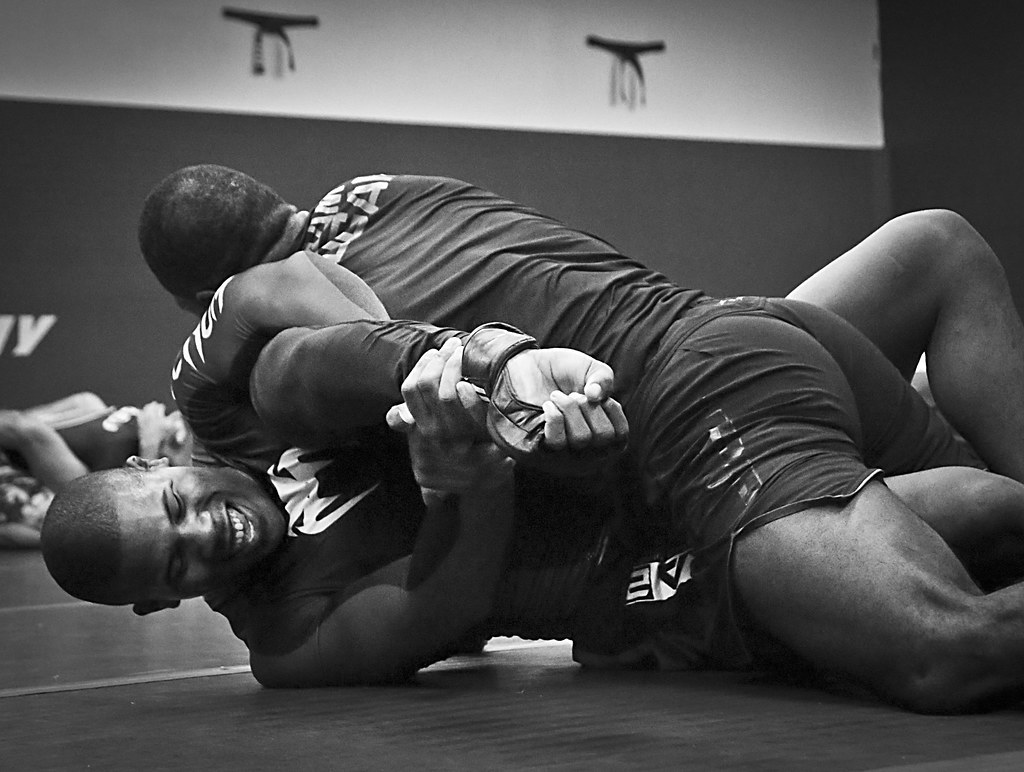
There are hundreds of submissions in Brazilian Jiu-Jitsu, and trying to learn them all at once is a recipe for knowing none of them well. The smart move is to pick a handful of high-percentage, low-risk submissions and drill them until they're automatic. Here are the best submissions for beginners to start with — and why each one earns its place.
What makes a good beginner submission?
The best first submissions share three traits:
- High percentage — they work against resisting opponents, not just in demos
- Safe to drill — low risk of injuring your partner while you learn the mechanics
- Foundational — they teach principles (leverage, angle, control) that transfer everywhere
Flashy submissions can wait. Master these first.
1. The rear naked choke
If you learn one submission, make it this. From back control, you wrap an arm under the chin and squeeze — no gi grip required, and it works on anyone. It teaches you to finish from the back, which is the most dominant position in jiu-jitsu. Drill the mechanics slowly: position the choking arm, connect the hands, expand the chest.
2. The armbar from closed guard
The armbar teaches leverage and hip movement better than almost any other move, and it chains beautifully with other attacks. From closed guard, when your opponent posts or defends a choke, the arm is right there. Safety note: apply slowly in drilling — the elbow is fragile.
3. The cross-collar choke
A gi staple from the closed guard. Deep grips with both hands create a powerful strangle, and even the threat of it breaks your opponent's posture and opens sweeps. It pairs naturally with the armbar in a classic "choke or arm" dilemma.
4. The triangle choke
Using your legs to strangle an opponent feels like magic the first time it works. The triangle is high-percentage and reinforces the angle and hip-discipline that make every guard attack better. It takes reps to get the finishing details, which is exactly why it's worth drilling early.
5. The kimura
A versatile shoulder lock you can hit from guard, side control, and half guard. It doubles as a control and a sweep entry, not just a finish — which makes it one of the most useful tools in a beginner's kit. Like the armbar, apply it with control while drilling.
A simple priority order
If you're not sure where to start, drill them in this order:
| Priority | Submission | Why first |
|---|---|---|
| 1 | Rear naked choke | Highest percentage; gi or no-gi |
| 2 | Cross-collar choke | Builds your closed guard offense |
| 3 | Armbar from guard | Teaches leverage; chains with the choke |
| 4 | Kimura | Versatile control + finish |
| 5 | Triangle choke | High reward, rewards repetition |
Drill them, don't just collect them
Knowing about a submission and being able to hit it are completely different things. The gap between them is reps. A focused drilling round can bank dozens of clean repetitions you'd never get in live rolling — the case we make in Why Drilling Beats Rolling for Beginners.
Pick one submission from this list, drill it forty times next class, and log it in DrillBuddy so you can track how many reps you've actually banked. Depth beats breadth — own a few submissions completely before adding more.