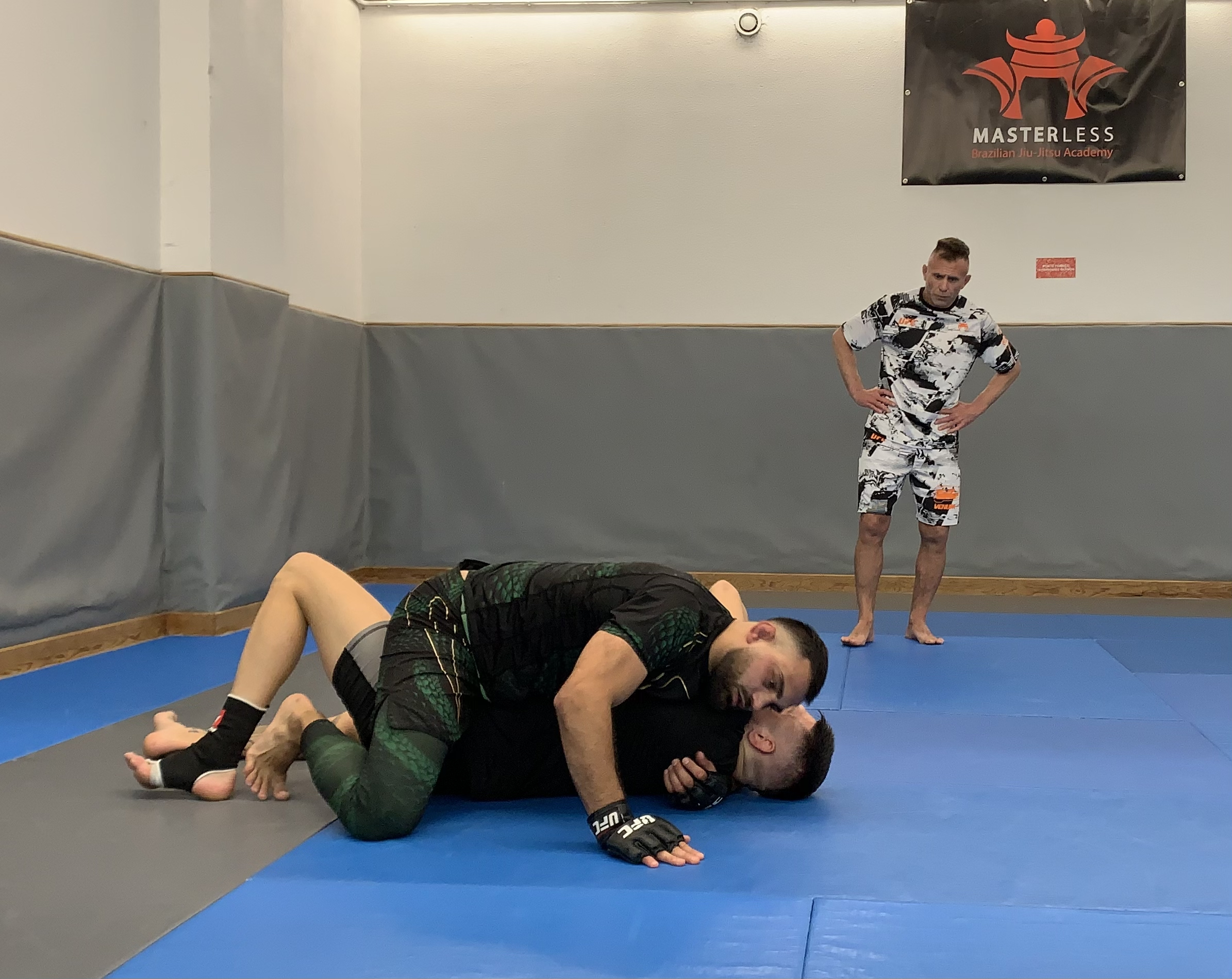
It's the question every new student asks within their first month: how long until I'm actually good at this? The honest answer is "longer than you'd like, but sooner than you fear" — and a lot depends on how you train, not just how long. Let's break it down realistically.
What does "good" even mean?
"Good" is a moving target, so let's define a few honest milestones:
- Surviving (3–6 months): You stop panicking, you can breathe under pressure, and you tap less often to the same mistakes.
- Holding your own (1–2 years): You can have competitive rolls with other beginners and impose your A-game sometimes.
- Genuinely skilled (4–5 years / brown belt): You have a real system, you control most untrained or less-experienced opponents easily, and you understand why things work.
- Expert (8–12 years / black belt): Mastery, with your own style and the ability to teach.
Most people asking the question mean the second milestone — "competent and dangerous enough to enjoy rolling." That's typically achievable in one to two years of consistent training.
The belt timeline
In BJJ, belts come slowly compared to other martial arts — which is exactly why they mean something. A common rough timeline for a dedicated student training a few times a week:
| Belt | Typical time | What it represents |
|---|---|---|
| White | Start | Learning to survive and the basic vocabulary |
| Blue | 1.5–2.5 years | A solid foundation; competent with the fundamentals |
| Purple | 4–5 years | Advanced; a developed personal game |
| Brown | 6–8 years | Refinement and teaching ability |
| Black | 9–12 years | Mastery |
These are averages, not promises. Some take longer, and that's completely normal — the black belt is famously "a white belt who never quit."
What actually determines your speed
Here's the part you control. Two students who start on the same day can be a belt apart in skill three years later. The difference comes down to a handful of factors:
Consistency beats intensity
Training three times a week, every week, for a year will take you further than sporadic two-hour marathons. Skill in jiu-jitsu is built through accumulated, repeated exposure — and consistency is what accumulates it. This is why a tracked, low-friction habit matters so much; see Building a Five-Minute Daily Drilling Habit.
Quality of repetitions
Mat time isn't the same as productive mat time. Drilling with intent — focusing on the key detail, getting clean reps — wires technique faster than mindless flow. We make the full case in Why Drilling Beats Rolling for Beginners.
Retention
If you forget half of what you're taught, you're effectively training at half speed. Capturing and reviewing techniques is one of the biggest accelerators available — and almost nobody does it. Start with How to Remember BJJ Techniques After Class.
Focus over collection
Students who pick a small number of positions and go deep progress faster than those who chase every new move. Depth beats breadth, especially in the first two years.
How to progress faster (without overtraining)
You can't skip the years, but you can make each one count for more:
- Show up consistently — frequency trumps marathon sessions
- Drill with intent — fewer, cleaner reps on high-value positions
- Keep a training journal so you learn from your sessions, not just during them — see How to Keep a BJJ Training Journal
- Go deep on a few positions before expanding
- Do solo work between classes to build hips, base, and conditioning — here are 12 drills
The honest bottom line
You'll feel competent enough to enjoy rolling within a year or two. You'll earn a black belt in roughly a decade. But the students who get good fastest aren't the most athletic — they're the ones who train consistently, drill with intent, and actually remember what they learn.
That's the whole reason we built DrillBuddy: to help you track your drilling, retain your techniques, and turn raw mat time into real, visible progress. The clock is going to tick either way. Make every session count.